

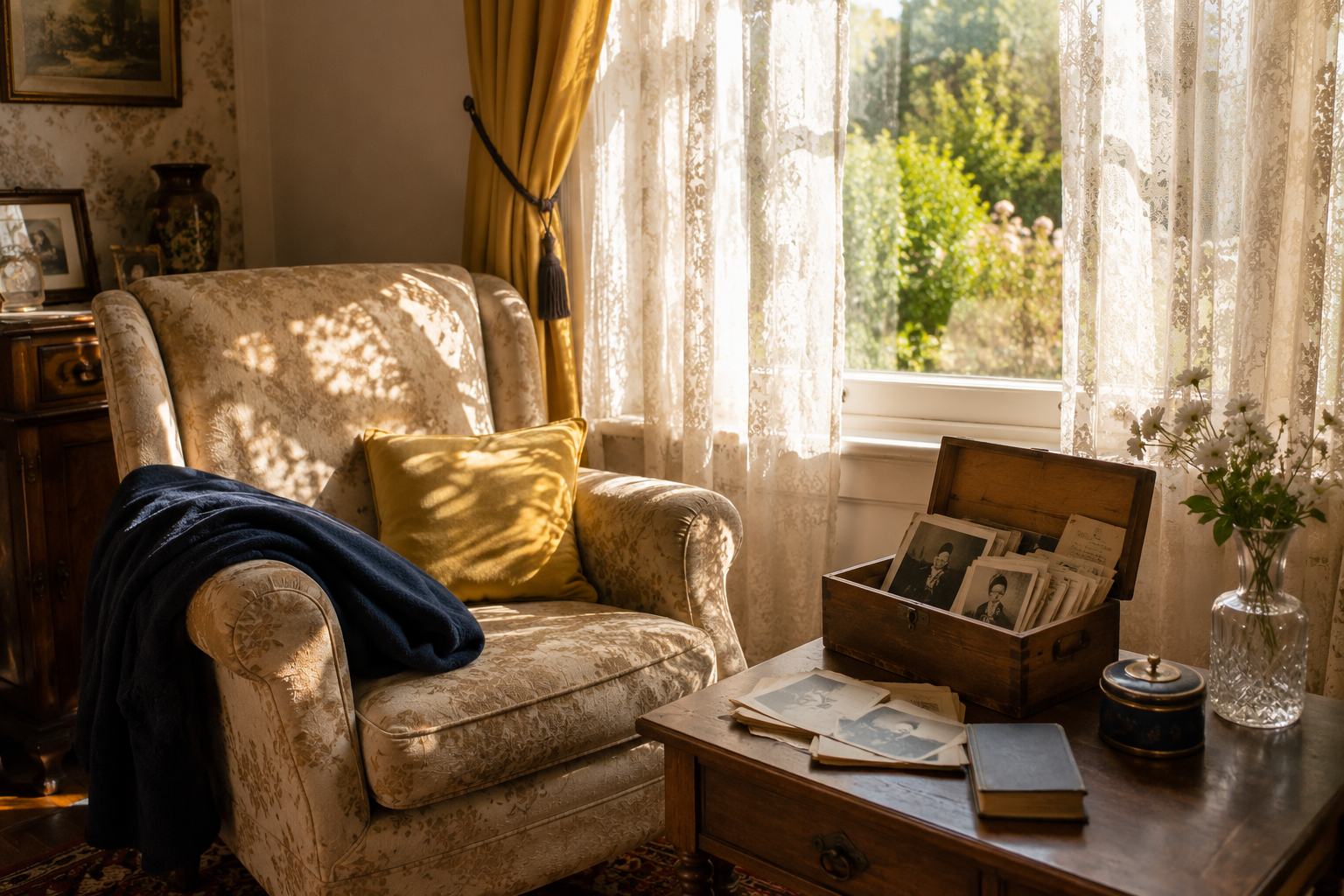
There’s no good way to write about this, so let’s just be practical and kind about it.
Clearing the home of someone you’ve lost is one of the harder things a person does. It’s physically tiring, it takes far longer than anyone expects, and it’s full of moments that catch you off guard — a handwriting on a shopping list, a coat that still smells like them.
If you’re facing it, here’s a gentle order to work through, and a few things worth knowing before anything leaves the house.
First: you probably have more time than you feel like you have
The pressure usually comes from somewhere specific — a rented property with notice to give, a sale going through, or family who live far away and can only come at certain times.
If none of those apply, there’s rarely a real deadline. It can feel like there is. But if the house is owned and empty, you’re allowed to do this slowly, in stages, with breaks.
Plenty of people clear a parent’s home over several months. That’s normal, and often kinder to everyone.
Before anything is thrown away
This is the practical bit that genuinely matters.
Speak to the executor or solicitor first. If the estate is going through probate, the contents may need valuing as part of it. Clearing a house before that’s sorted can cause real complications. A quick call before you start saves a lot of difficulty later.
Search properly for documents. Wills, deeds, insurance policies, share certificates, premium bonds, pension paperwork, bank books. These turn up in odd places — biscuit tins, the backs of drawers, inside books.
Check the hiding places. This is the one everyone forgets. Older generations, particularly, kept cash and jewellery tucked away — under mattresses, in coat pockets, inside teapots, taped behind drawers, in the freezer. Go through pockets and containers before anything is bagged up.
Photograph the rooms before you start, especially if several people are inheriting. It’s a small thing that prevents a lot of awkwardness later.
A simple way to sort
Four piles, done room by room rather than all at once:
Keep — the things you or the family want. Be careful here in both directions. People throw away things they later wish they’d kept, and people also keep whole houses’ worth of things out of guilt. Neither feels good in a year.
Family — items other relatives have asked for. Set these aside early and clearly.
Donate or sell — usable furniture, clothes, books, kitchen things. Charities will often collect furniture in good condition, and there’s a real second-hand market for decent pieces.
Clear — worn-out, broken, or simply unusable. Most of a house tends to land here, and that’s normal.
On keeping things
You don’t need to keep everything to remember someone. And you don’t need to justify keeping something that seems small.
A useful trick: if there’s a lot of one thing — twenty vases, a wall of books — keep one or two that mean the most and let the rest go. You get the memory without the storeroom.
Photographs of items can be enough too. Take a picture of the armchair before it goes. It’s surprising how much that helps.
If it’s too much to do alone
That’s not a failure. It’s extremely common.
Some people can’t face the house at all. Some can do the sorting but not the lifting. Some want help with everything except one room they’d rather do themselves.
A good clearance company will work at your pace — set aside anything you want kept, work room by room, and leave the parts you want to handle yourself. You don’t have to explain or apologise for how you want it done.
What happens to everything
Worth knowing, because it matters to a lot of people: a responsible clearance doesn’t mean a skip.
Usable furniture and goods go to charities and reuse where possible. Recyclables are separated. Only what genuinely can’t be used or recycled goes to licensed disposal — and you should be given a waste transfer note showing it was handled properly.
If it helps to know things went on to be useful somewhere, ask. Any decent company will tell you.
If the estate is in probate, or you’re unsure of your responsibilities as an executor, speak to the solicitor handling it before clearing the property.
FAQ
How long do I have to clear a deceased person’s house? If the property is owned and empty, there’s usually no fixed deadline. Rented properties or a pending sale create real timeframes — otherwise you can take it in stages.
Should I clear a house before probate is granted? Check with the executor or solicitor first. Contents may need valuing as part of the estate, and clearing early can cause complications.
What should I look for before clearing a house? Important documents such as wills, deeds and policies, and hidden valuables — cash and jewellery are often tucked away in unusual places. Check pockets and containers before anything is bagged.