

Local delivery is simple. It gets more interesting when the item is in Coventry and needs to be in Cornwall.
One sofa doesn’t fill a van, and nobody wants to pay for a van to drive 300 miles half empty. Fortunately there are a few ways to do this, and the cheapest one is the one most people have never heard of.
Option 1: Dedicated delivery
A van goes directly from A to B, carrying only your item.
Good for: anything urgent, fragile or valuable. It’s collected once, unloaded once, and arrives when you agreed.
The trade-off: you’re paying for the whole vehicle over a long distance, so it’s the most expensive option.
Option 2: Part-load
Your item shares the van with other people’s, all heading roughly the same way. You pay for the space you use rather than the whole van.
Good for: ordinary furniture and household items when the exact hour of arrival isn’t critical.
The trade-off: you fit around a route. Delivery is usually a window — a day or a range of days — rather than a precise time.
Option 3: Backloading (the one worth asking about)
Here’s the useful one.
Vans regularly make long journeys and return empty. A backload fills that return leg. The driver is already making the trip, so carrying your item costs them very little — and that saving is passed on to you.
Good for: anyone flexible on timing. It can be dramatically cheaper than a dedicated run.
The trade-off: availability. It depends on a van already heading your way, so it suits people who can wait a little rather than those who need it Thursday.
If you’re not in a rush, always ask whether a backload is possible. It’s the single biggest saving available on long-distance single items.
Which one suits you?
Need it fast, or it’s precious? Dedicated. Ordinary item, flexible-ish? Part-load. Not in a hurry at all? Ask about a backload.
Preparing for a long trip
A three-hundred-mile journey asks more of an item than a trip across town — hours of road vibration rather than minutes.
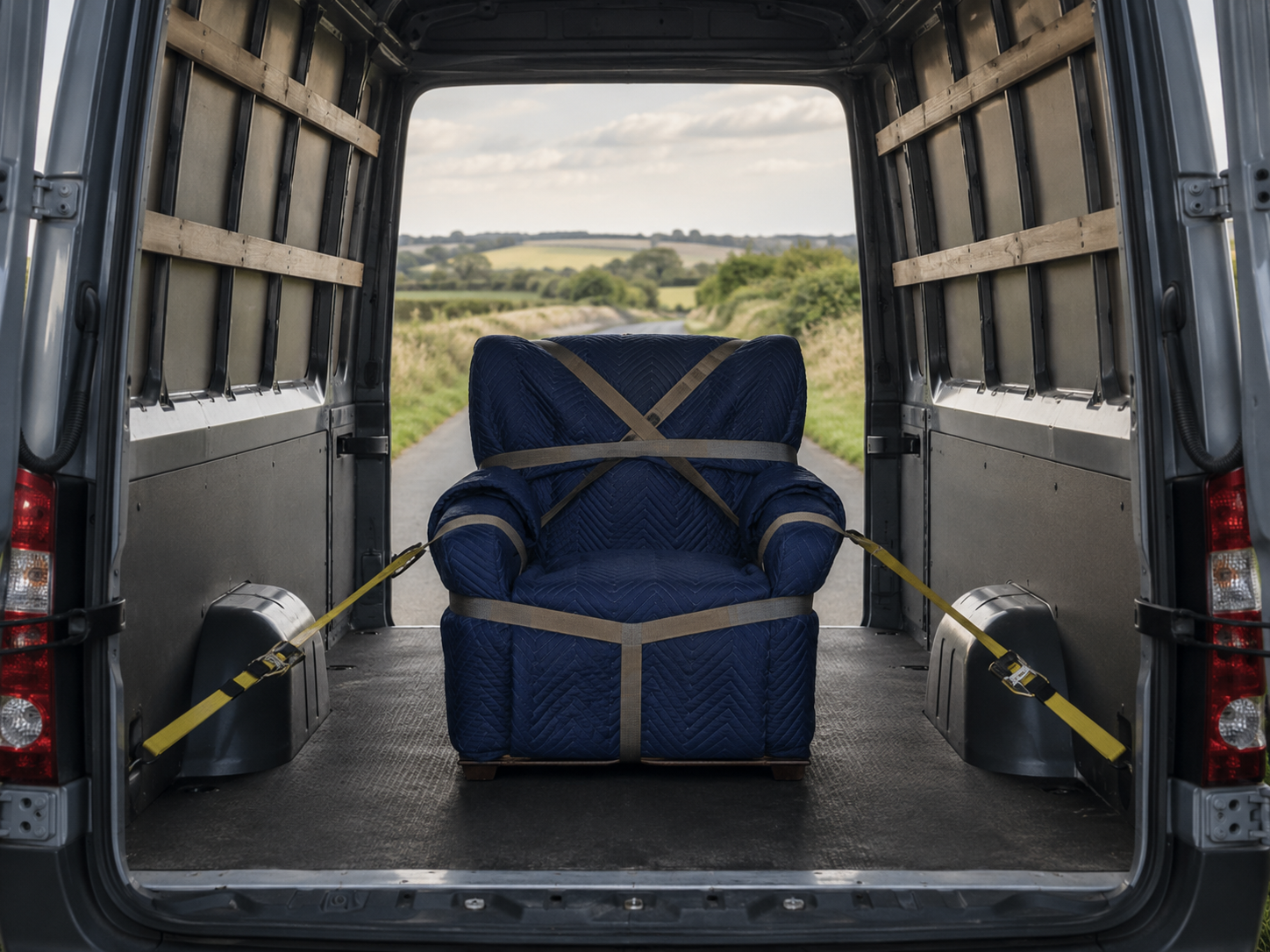
- Wrap furniture in blankets, not plastic. Plastic traps moisture over a long journey and can mark surfaces
- Dismantle what comes apart. Less to snag, less to break, and less space used, which lowers the price
- Pad corners and edges — that’s where the knocks land
- Empty drawers and tape them shut so nothing swings open
- Photograph it before collection. Useful for everyone if there’s ever a question about condition
Check the insurance
For a long journey it’s worth asking directly: is the item covered, and up to what value?
Most reputable services carry goods-in-transit cover, but limits vary and some exclude particular items. Two minutes of asking beats finding out afterwards.
A tip for buyers and sellers
If you’ve bought something far away, agree the collection window with the seller before you book anything. Long-distance jobs are planned around routes, and a seller who isn’t in when the van arrives is an expensive problem.
Get a name and a mobile number for the collection address. It solves nearly everything.
FAQ
How do I send a single item long distance in the UK? Choose between a dedicated van, a shared part-load, or a backload on a van already making the return journey. Backloads are usually cheapest if you’re flexible on timing.
What is a backload? When a van is returning from a job and travelling back mostly empty. Filling that return leg costs the operator little, so it’s often much cheaper for you.
Is it cheaper to use a part-load for furniture? Usually yes. You pay only for the space your item takes rather than the whole van, though delivery is a window rather than an exact time.