

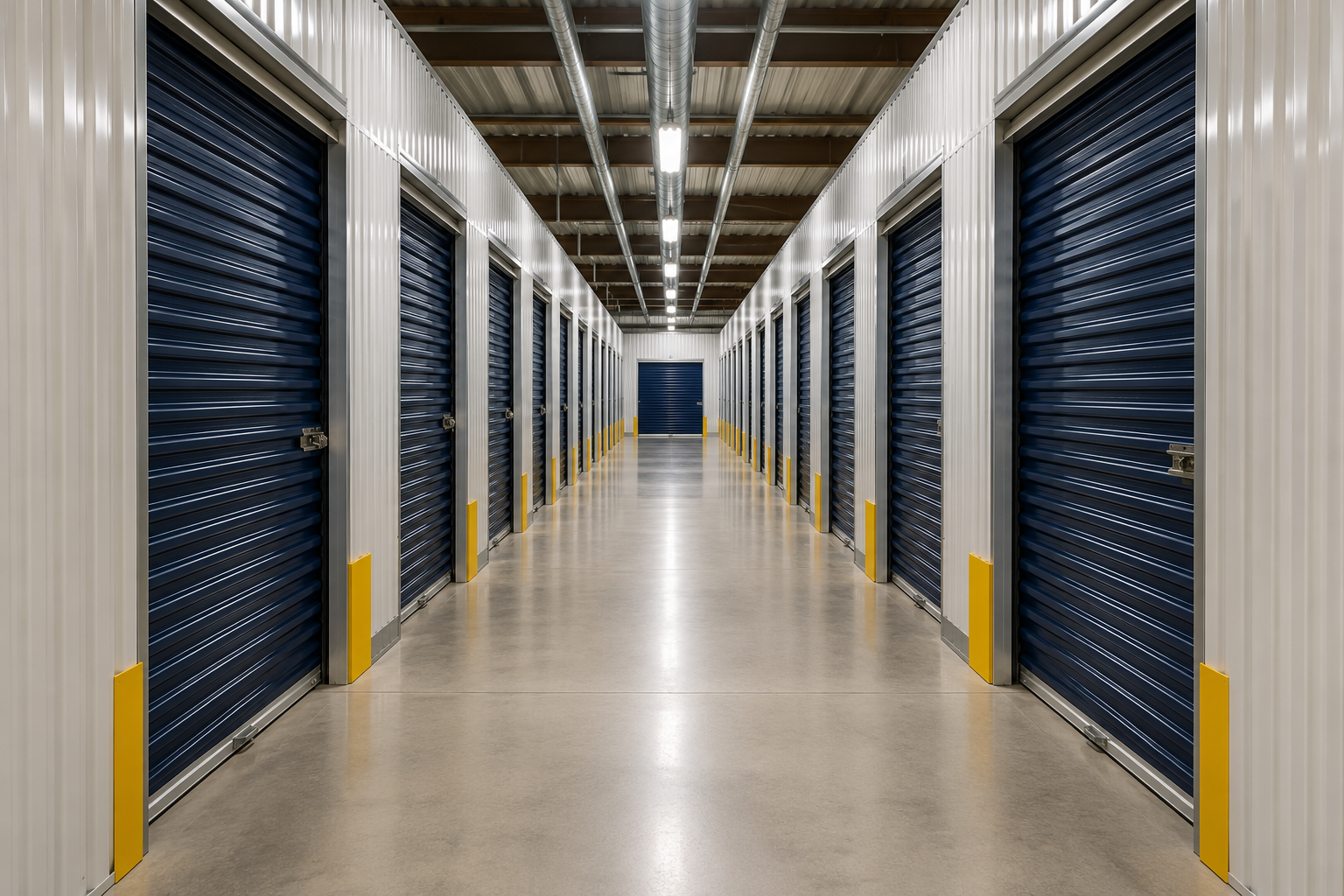
Storage units all look much the same on a website. A price, a photo of a clean corridor, a booking button.
The differences only show up later — when you can’t get in on a Sunday, or you open a box in March and find it’s damp. Here’s what’s worth checking before you book, not after.
Security: look past the word “secure”
Every facility says secure. What matters is what’s actually in place:
- CCTV across the whole site, not just the entrance
- Individual unit alarms, so your unit is protected, not just the building
- Gated or PIN-controlled access, with a record of who comes and goes
- Your own lock and key, so nobody else can open your unit
If a site can’t tell you plainly what’s in place, that’s your answer.
Access: when can you actually get in?
This is the one people wish they’d asked.
Some facilities are 9-to-5, weekdays only. Which is fine — until you need a box on a Saturday morning and the gate is shut.
Ask directly: is it 24/7, and does that cost extra? Also worth checking whether you can drive up to the unit or have to carry things a distance, and whether there are trolleys and a lift for upper floors.
Condition: clean, dry, and looked after
A quick visit tells you more than any website.
Look for a unit that’s clean, dry and ventilated, with no musty smell and no water marks on the walls or floor. Ask what the facility does about damp and pests.
Storage that isn’t dry will quietly ruin fabric, wood and electronics over a few months. It’s the single most important physical thing to check.
Insurance: what’s actually covered?
Most facilities require your contents to be insured, and the arrangements vary a lot.
Ask: is insurance included or extra? What’s the cover limit? What’s excluded? Some policies don’t cover certain valuables at all.
If you’re storing anything of real value, get this in writing rather than assuming.
The contract: the bit worth reading
Three questions save most of the trouble here:
- Is there a minimum term? Some tie you in for months.
- How much notice do you need to give when you want to leave?
- Are there extra fees? Admin charges, a compulsory padlock, or a deposit can turn a cheap-looking weekly rate into something else.
A good facility will give you the all-in price without you having to dig for it.
The practical stuff that saves money
Getting your things there. If you don’t have a van, factor in hire or a collection service — some facilities include free collection on longer bookings, which can be worth more than a small difference in weekly price.
Right-sizing the unit. Paying for space you don’t use is the most common way people overspend on storage. Ask them to help you judge it honestly rather than upselling you.
A simple checklist to take with you
- CCTV, alarms and gated access — confirmed
- Access hours that suit you, at no extra cost
- Clean, dry unit with no musty smell
- Insurance cover explained and adequate
- No minimum term, or one you’re comfortable with
- All-in price, with nothing hidden
- Help getting your things there
FAQ
What should I look for in a storage facility? Proper security (CCTV, individual alarms, gated access), access hours that suit you, a clean and dry unit, clear insurance, and a contract with no hidden fees or long tie-in.
Is 24-hour access to storage important? It matters more than people expect. If you need things at short notice or outside working hours, weekday-only access becomes frustrating quickly.
Do I need insurance for self storage? Most facilities require it. Check whether it’s included or extra, what the limit is, and what’s excluded before you store anything valuable.