

Most moving-day breakages aren’t dramatic. Nothing gets dropped. Things simply shift inside a box that had room to move, and rub against each other for twenty miles.
Which is good news, because it means breakages are mostly preventable. Here’s how.
The one principle behind all of it
Nothing should be able to move inside the box.
If you can shake a box and hear something shift, it isn’t packed yet. Everything below is just different ways of achieving that.
Glasses and stemware
Wrap each one individually in paper — never leave them touching. Stuff paper inside the glass first, which supports it from within.
Stand them upright, not on their sides. Use a box with dividers if you have one, and fill every gap with crumpled paper.
Glasses are light, so a smaller box works fine and won’t get too heavy.
Plates and bowls
The counter-intuitive one, and worth remembering: plates travel on their edge, standing up like records in a crate.
Stacked flat, the weight presses down through the pile and the bottom plates crack. On their edge, they’re dramatically stronger.
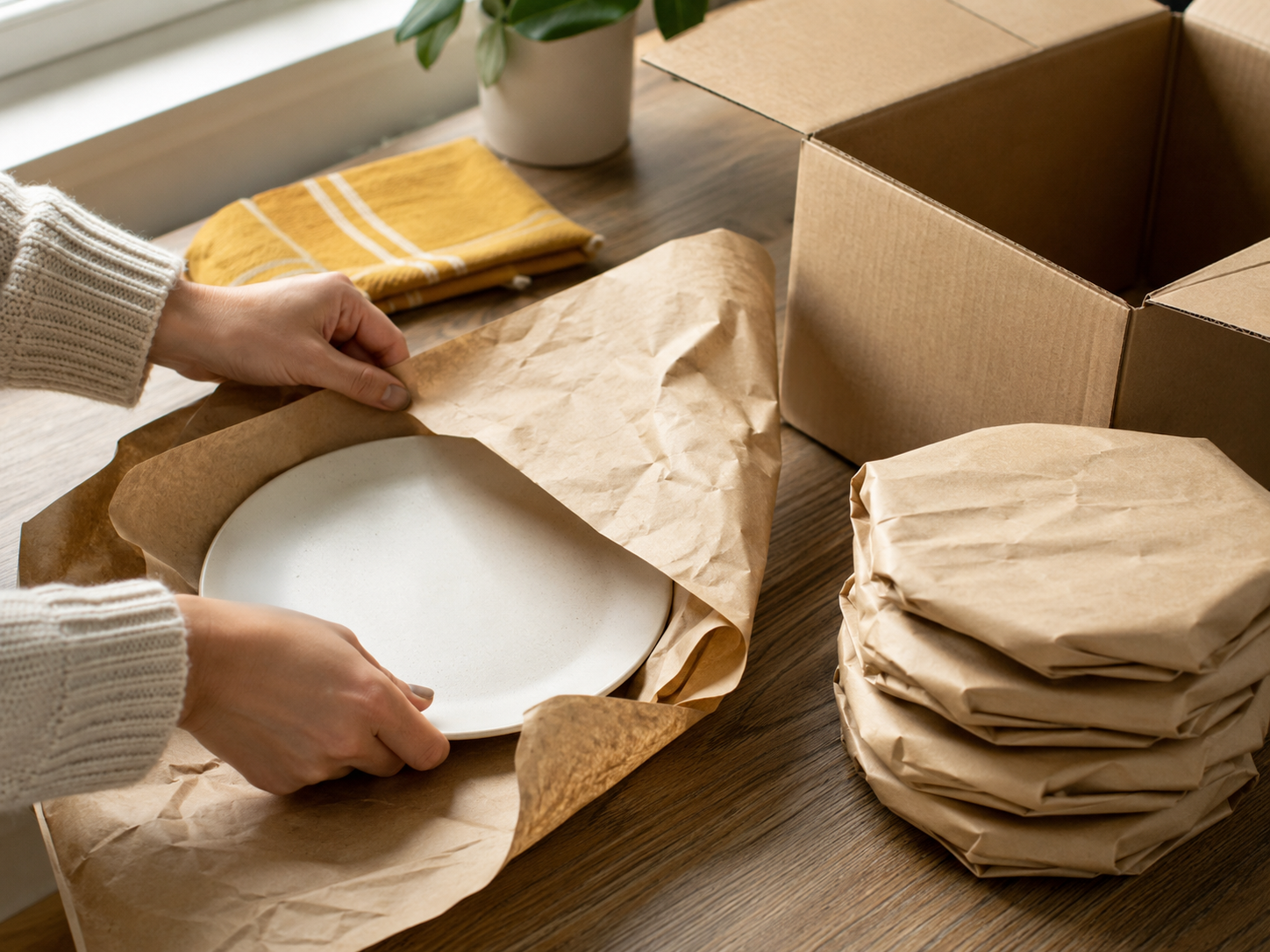
Wrap each one, line the bottom of the box with crumpled paper, and pack them snugly upright.
Mirrors and picture frames
Tape a large X across the glass with masking tape. It won’t stop a break, but it holds the glass together if it does — which is the difference between a broken mirror and broken glass all through your things.
Wrap in bubble wrap, protect the corners, and always transport them standing on edge, never flat. Flat is how frames snap.
Electronics
Original boxes are ideal if you kept them. If not, wrap well and pad generously.
Photograph the cables before you unplug anything. Ten seconds now, twenty minutes saved later.
Screens travel upright, like mirrors, and shouldn’t have anything stacked on them.
The things you can’t replace
Photo albums, heirlooms, a grandmother’s china, artwork.
Wrap these individually, pack them separately from the everyday things, and — if it matters enough — carry them in the car with you rather than on the van. Some things aren’t worth the small risk, however careful everyone is.
For genuinely valuable pieces, ask about proper crating.
Labelling fragile boxes
Mark fragile on at least two sides and the top, and add which way is up. A box that’s clearly labelled gets carried differently — and stacked differently.
Don’t put heavy boxes on top of fragile ones in the van. It sounds obvious; it’s the most common cause of avoidable damage.
The insurance point worth knowing
Here’s something a lot of people find out too late: with most removal companies, items you pack yourself may not be covered for breakage in transit — because nobody can verify how they were packed.
Professionally packed boxes usually are covered. If you’re moving anything genuinely valuable, that’s worth a conversation before you decide who packs what. [Check what your cover includes.]
FAQ
How do you pack glasses so they don’t break? Wrap each one individually, stuff paper inside the glass for support, stand them upright rather than on their sides, and fill every gap so nothing can move.
Should plates be packed flat or on their side? On their side, standing upright like records. Stacked flat, the weight from above cracks the lower plates.
Are self-packed boxes insured during a move? Often not. Many removal policies only cover items packed by professionals, since self-packed boxes can’t be verified. Always check before you decide.