

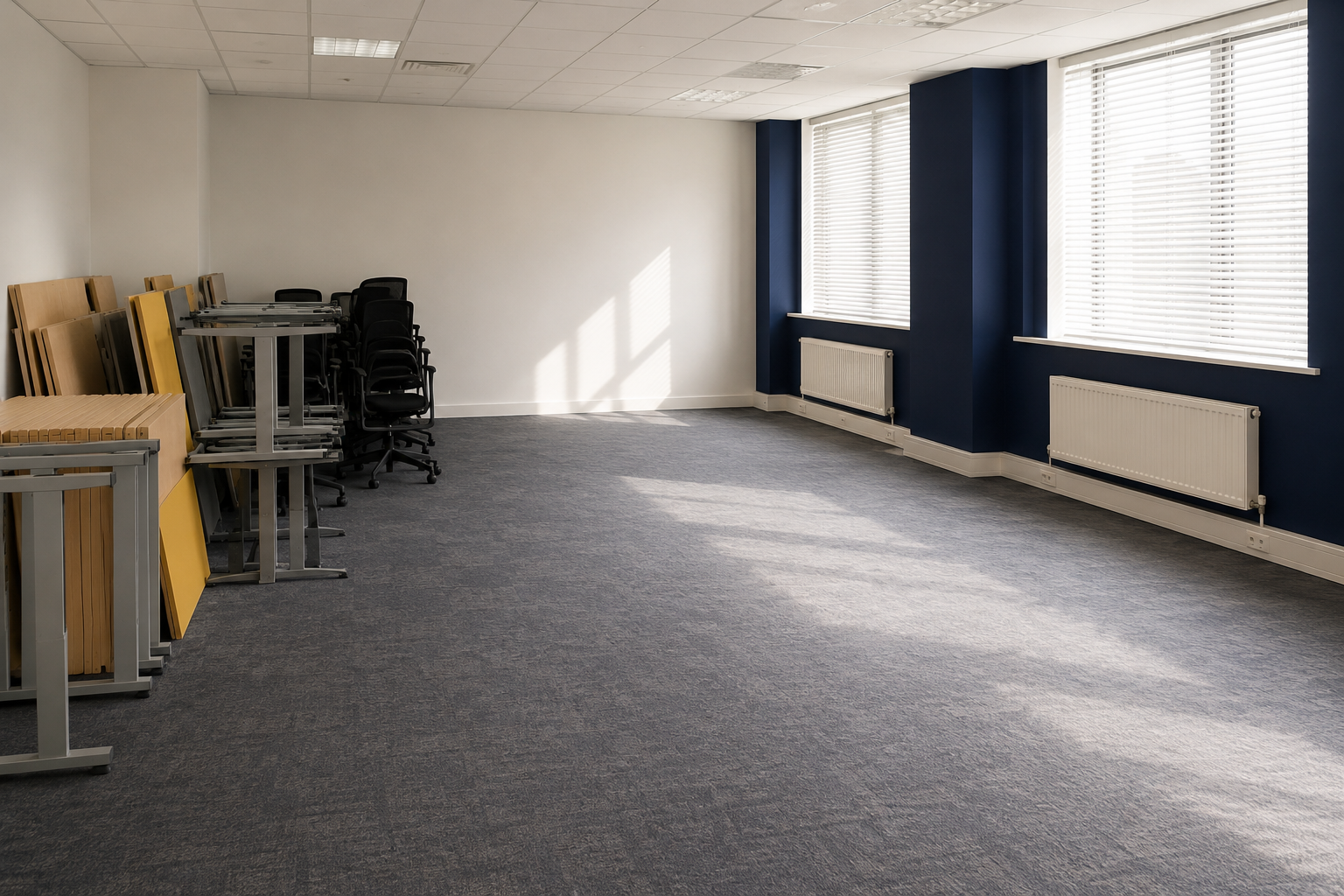
Every office move produces a pile of things that aren’t going to the new place. Desks that don’t fit the new layout, chairs nobody liked, and a cupboard of computers that have been “waiting to be sorted” since 2019.
Here’s how to deal with it properly — including the bit that carries real risk.
First, the important one: data
Before a single old computer leaves the building, deal with what’s on it.
Old machines hold customer records, financial data, and staff information. Deleting files and emptying the recycle bin does not remove data — it’s straightforwardly recoverable. Neither does a standard factory reset on many devices.
Your options:
- Have drives professionally wiped, to a recognised standard, with a certificate
- Have drives physically destroyed, again with a certificate
- Remove and keep the drives if you’d rather not let them go at all
Keep a record of which machine went where. If your business handles personal data, this isn’t just tidiness — it’s a data protection obligation, and a leak from a discarded computer is a genuinely serious problem.
The same applies to paper. Old files, HR records and client paperwork need proper shredding, not a skip.
Old IT equipment: it can’t go in a skip
Electrical equipment is classed as WEEE — waste electrical and electronic equipment — and it has its own disposal rules in the UK. Monitors, PCs, printers, servers, phones and cables all fall under it.
In practice that means it goes to a licensed handler, not a general waste bin. A clearance company that handles commercial WEEE will take it and provide the paperwork.
Furniture: sell, donate, or recycle
Office furniture is bulkier than people expect and often more useful than it looks.
Sell it. Decent desks, chairs and cabinets have a real second-hand market. Business clearance companies and used-office-furniture dealers will sometimes buy in bulk.
Donate it. Charities, community groups, schools and startups are often glad of usable desks and chairs. It’s good for the local community, and it keeps things out of landfill.
Recycle it. Anything past use should go to a licensed carrier who’ll strip it for materials rather than bury it.
Why the paperwork matters here
For business waste there’s an extra layer worth knowing: your responsibility doesn’t end when someone drives away with it.
Use a licensed waste carrier, and make sure you get a waste transfer note. If waste from your business is fly-tipped, that documentation is what proves you did the right thing. Without it, the liability can land back with you.
Ask to see the licence. Any legitimate firm will show it without hesitating.
A sensible order to do it in
- Audit early — walk the office and mark what’s going, what’s staying, and what’s being cleared
- Sort data first — wipe or destroy drives, shred paper
- Sell or donate anything usable, while there’s still time
- Book the clearance for after the move, so you’re only paying to shift what’s left
- Keep the certificates — data destruction and waste transfer notes together in one file
The easy version
If that sounds like a project, it can simply be part of the move. We can clear the old site after your relocation — furniture, IT and general clutter — recycle what can be recycled, and give you the paperwork for your records. One job, one contact, nothing left behind.
FAQ
How should a business dispose of old computers? Wipe or physically destroy the drives first, ideally with a certificate, then pass the equipment to a licensed WEEE handler. Standard deletion and factory resets don’t reliably remove data.
Can office furniture go in a skip? Usable furniture is better sold or donated, and electrical items can’t go in general waste at all. Whatever’s cleared should go through a licensed waste carrier who provides a waste transfer note.
What is a waste transfer note and do I need one? It’s documentation showing your waste was passed to a licensed carrier and handled legally. For business waste it’s important — if it’s later fly-tipped, it’s your proof you did things properly.